
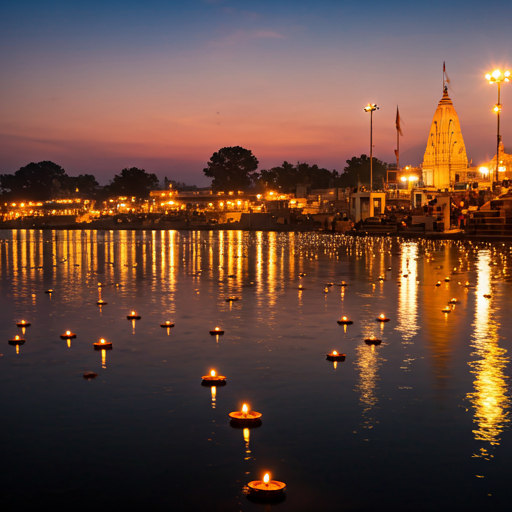
The Soul of Nashik
Experience the convergence of celestial alignment and spiritual devotion. A timeless tradition on the banks of the sacred Godavari River.
Where Faith Conflues with the Godavari
Discover the spiritual heartbeat of Nashik, where millions of devotees converge along the sacred banks of the Godavari River for the legendary Simhastha Kumbh Mela. A journey through this sacred gathering is far more than a pilgrimage—it is a profound reconnection with centuries of divine energy, Vedic traditions, and cosmic harmony. As the sacred river flows through Ramkund and Panchavati, every dip offers a soul-cleansing experience rooted in ancient heritage. With over a decade of local travel expertise, Mahakumbh Tours & Travels ensures your holy pilgrimage is seamless, comfortable, and deeply memorable. Let us guide your spiritual path through Nashik, Trimbakeshwar, and beyond.
12
Years of preparation for a moment of transcendence.
Sacred History
Simhastha Experience
While ritual bathing draws the largest attention, the Simhastha is equally sustained by its non-ritual life:
- Spiritual Discourses and Satsangs :Continuous philosophical dialogue forms the intellectual backbone of the Kumbh.
- Seva and Community Kitchens :Large-scale charitable service reflects the ethic of collective responsibility.
- Music, Chanting, and Oral Tradition :Knowledge is transmitted not through texts alone, but through sound and memory.
- Inter-sect Dialogue :The Kumbh acts as a rare meeting ground for diverse spiritual paths within Hinduism.
The wider Nashik–Trimbakeshwar region forms an extended sacred map:
- Panchavati and Kalaram Temple :Anchor Ramayana traditions.
- Sita Gufa and Anjaneri Hills :Connect mythology with geography.
- Brahmagiri Hill :As the river’s source, represents spiritual origin.
- The Pandavleni Caves :Reveal the region’s layered religious history beyond Hinduism.
Contemporary Simhastha Melas reflect a delicate balance between scale and sanctity. Environmental responsibility, technological integration, and crowd coordination now coexist with ritual purity and ascetic discipline.
Yet despite modern systems, the Kumbh remains fundamentally human-powered, driven by faith, memory, and shared belief rather than spectacle.
To ensure a smooth pilgrimage experience, keep these core operational realities in mind:
- Expect altered access patterns :During key ritual phases, movement within Nashik and Trimbakeshwar follows ceremonial and security-led routes rather than everyday city traffic flows.
- Walking is integral to the experience :Much of the Simhastha is navigated on foot, reflecting both practical necessity and pilgrimage tradition.
- Time operates differently :Distances that appear short on maps often take longer during the Simhastha, not due to inefficiency but due to ritual sequencing and crowd rhythm.
- Follow institutional guidance :Akhara processions, bathing cycles, and administrative instructions shape how spaces are used and accessed during the event.
In an increasingly fragmented world, the Simhastha Kumbh Mela stands as a reminder of collective spiritual identity. It dissolves social hierarchies, compresses time, and reconnects individuals with traditions far older than themselves.
For some, it is a pilgrimage. For others, a cultural immersion. For many, it is simply an encounter with scale, devotion, and continuity that cannot be replicated elsewhere. The Simhastha Nashik Kumbh Mela 2027 - 28 - 28 is not just observed, it is entered, endured, and remembered.
The Simhastha Kumbh Mela is experienced differently by different people, shaped as much by individual intention as by ritual structure. For some, it is a lifelong spiritual commitment, a return to practices observed across generations. For others, it is a moment of cultural immersion, offering a rare window into living traditions that continue to shape Indian civilization.
At the same time, the Simhastha is physically demanding and emotionally intense. Its scale, pace, and sensory density can be overwhelming for those unprepared for prolonged walking, crowds, and highly structured ritual environments. Approaching the Kumbh with patience, humility, and openness often determines the depth of the experience more than familiarity with the ritual itself.
This range of responses is not a contradiction but a reflection of the Simhastha’s breadth, a gathering vast enough to accommodate devotion, curiosity, and quiet observation in equal measure.
During the Simhastha Kumbh Mela, the Nashik–Trimbakeshwar region functions not as a conventional host city but as a vast, temporary settlement system designed to absorb an extraordinary influx of pilgrims and ascetic communities.
Accommodation during the Simhastha extends beyond permanent hotels and lodgings. Large tented settlements and monastic camps established by Akharas, dharamshalas, and community-run shelters together form a layered housing network that mirrors the social and spiritual diversity of the gathering. These temporary habitats are organized around ritual zones, processional routes, and bathing ghats rather than commercial districts.
For many participants, accommodation is not merely a matter of rest but an extension of pilgrimage life: shared spaces, simple living conditions, and proximity to ritual activity are often embraced as part of the spiritual discipline associated with the Kumbh.
This system of temporary habitation is one of the Simhastha’s most remarkable organizational achievements, demonstrating how large-scale human movement has been sustained for centuries through collective effort, institutional coordination, and voluntary service.
The Simhastha Kumbh Mela features several highly auspicious bathing dates (Amrit Snan) and ceremonial events dictated by planetary alignments:
- 31 October 2026: Official Commencement (Dhwajarohan – Flag Hoisting) :This pivotal event marks the formal spiritual opening of the Kumbh Mela as sacred flags are hoisted across Ramkund and Trimbakeshwar. The ritual invites cosmic deities and saintly lineages to reside on the banks of the Godavari, signaling the official start of all sacred traditions and daily rituals.
- 24 July 2027 - 28: Nashik Kumbh Mela Flag Hoisting Ceremony :A grand ceremonial launch honoring the historical traditions and preparations of the Akhadas for the core 2027 - 28 gathering. Spiritual leaders assemble to establish the sacred encampments, invoking divine blessings to ensure smooth, safe, and auspicious proceedings for millions of visiting devotees.
- 02 August 2027 - 28: First Amrit Snan (Ashadh Somvati Amavasya) :Regarded as the most potent initial bathing date, taking a holy dip on Somvati Amavasya is believed to cleanse lifelong karma and ancestral debts. The unique celestial alignment on this new moon day charges the Godavari's waters with divine energy, offering seekers profound inner peace and spiritual awakening.
- 31 August 2027 - 28: Second Amrit Snan (Shravan Amavasya) :Occurring during the deeply holy month of Shravan, this Amrit Snan holds immense spiritual weight for devotees of Lord Shiva. Pilgrims perform sacred bathing rituals alongside Vedic chants to absorb the heightened cosmic vibrations that flood the river basin during this auspicious lunar phase.
- 11 September 2027 - 28: Third Amrit Snan - Vaishnava (Bhadrapada Shuddha Ekadashi) :This major royal Snan day is dedicated exclusively to the Vaishnava Akhadas and their magnificent, vibrant processions at Ramkund in Nashik. Devotees gather to witness venerated sadhus lead grand ceremonial dips, filling the atmosphere with ecstatic devotional music, conch blowing, and divine celebrations.
- 12 September 2027 - 28: Third Amrit Snan - Shaiva (Kushavarta Tirtha, Trimbakeshwar) :Reserved for the Shaiva Naga Sadhus, this royal Shahi Snan takes place at the historical Kushavarta reservoir in sacred Trimbakeshwar. Representing ancient ascetic traditions, thousands of holy ascetics perform their ritual dips under rare planetary positions, creating an awe-inspiring spectacle of deep spiritual devotion.
- 26 January 2028: Mouni Amavasya Special (Mouni Amavasya) :Known as the ultimate planetary alignment day of the Mela, pilgrims observe strict vow of silence (Mauna) during their holy bath. This practice of mental stillness combined with the sacred waters facilitates deep self-realization, spiritual purification, and the ultimate pursuit of liberation.
Rituals & Key Events
Experience the profound spiritual practices that have been observed for millennia. Each ritual carries deep significance and offers unique blessings to participants.
The Shahi Snan, also widely known as the Royal Bath, stands as the indisputable spiritual climax and grandest spectacle of the entire Simhastha Kumbh Mela. Rooted deeply in ancient Vedic scriptures, this sacred ritual marks the exact moments when planetary alignments—specifically when Jupiter enters the constellation of Leo—infuse the waters of the sacred Godavari River with supreme cosmic vibrations and divine immortality (Amrit). Led in magnificent royal processions by the revered Akharas, Mahamandaleshwars, and legendary Naga Sadhus, millions of pilgrims gather along the historic stone steps of Ramkund and Kushavarta Kund to bear witness to this holy immersion. The atmosphere reverberates with the thunderous blowing of conch shells, the rhythmic beating of traditional dhol drums, resonant Vedic chanting, and showers of flower petals falling from the sky. Devotees firmly believe that taking a holy dip alongside the holy saints on these designated auspicious dates cleanses generations of karmic sins, purifies the subtle body, and directly paves the way for spiritual liberation (Moksha). The spectacle begins long before dawn as thousands of ascetics adorn themselves with sacred ash (Bhasma), marigold garlands, and trident spears before leading their followers into the river's sanctified waters. For international travelers and domestic pilgrims alike, witnessing the energy of the Shahi Snan is a transformative, once-in-a-lifetime experience that bridges ancient cosmic science with living human faith. To ensure safety amidst the millions of gathering seekers, local authorities setup extensive pedestrian corridors, dedicated emergency zones, and strictly managed bathing slots for each Akhara. Experiencing the quiet peace that settles over the river after the royal immersion leaves an indelible mark on every soul present. Planning your journey to coincide with these Royal Bathing dates requires early accommodation bookings and well-arranged private transport to navigate the city's festival security perimeters seamlessly.
Peshwai is the ceremonial and triumphant royal procession that heralds the formal arrival of the ancient monastic orders, known as Akharas, into the Kumbh Mela grounds. Steeped in centuries of military and monastic heritage, these grand parades showcase the living grandeur of Indian spiritual asceticism as various Shaivite, Vaishnavite, and Udasin orders march toward their designated tented encampments. At the head of the procession ride the revered Mahamandaleshwars atop richly decorated elephants, silver chariots, and open palanquins, bestowing blessings upon thousands of devotees lining the city streets. Accompanying them are the fierce Naga Sadhus, who demonstrate mesmerizing martial arts traditions, skillful sword play, and ancient weapon drills passed down through generations of monastic defenders. Brass bands play vibrant devotional tunes alongside traditional dhol-tasha drummers, creating a joyful and energetic rhythm that echoes across Nashik's historic avenues. Devotees throw flowers, bow in reverence, and offer traditional sweets to the procession as it slowly winds its way through the heritage quarters of the city. Each Akhara displays its unique flags, emblem standards, and ceremonial symbols, representing their specific lineage dating back to the times of Adi Shankaracharya and ancient Vedic seers. The Peshwai serves as a powerful reminder of spiritual discipline, unity, and the preservation of sacred traditions amidst the modern world. Photographers and cultural enthusiasts find the Peshwai to be one of the most visually stunning events, offering rare glimpses into secretive monastic traditions. Navigating the procession route requires local awareness and early arrival at key vantage points along Panchavati and the main festival arterial roads.
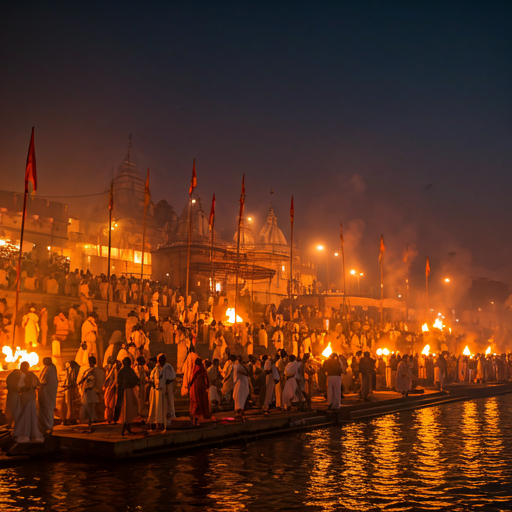
As twilight casts a golden glow over the sacred city of Nashik, the riverbanks of the Godavari transform into a mesmerizing sanctuary of light, sound, and deep devotion. The Godavari Aarti is a daily evening ceremony conducted at Ramkund, where Vedic priests dressed in traditional silk attire perform synchronized worship using massive, multi-tiered brass lamps. Each lamp, holding dozens of burning wicks fed with pure camphor and ghee, is lifted in rhythmic circular motions to honor the holy river as a living mother goddess (Mata Godavari). Hundreds of floating diyas (small leaf boats carrying oil lamps and marigold flowers) are released onto the water by pilgrims, creating a floating galaxy of flickering golden lights upon the river’s gentle waves. The air fills with the harmonious chanting of ancient Sanskrit stotrams, the rhythmic ringing of heavy temple bells, and the deep, resonant echoes of blown conch shells. Devotees stand shoulder-to-shoulder on the stone steps, folding their hands in silent prayer or joining the choruses of devotional hymns that ripple across the water. The reflective glow of the brass lamps on the river, combined with the fragrant smoke of burning incense and dhoop, creates an atmosphere of deep spiritual serenity. This evening ritual provides seekers a peaceful moment of contemplation after a day of pilgrimage and exploration through Nashik’s historic temple circuits. Visiting the evening Aarti is an essential cultural experience for every traveler, offering profound insight into the daily spiritual rhythms of Western India. Arriving at Ramkund at least 45 minutes before sunset is highly recommended to secure a clear view along the steps and participate fully in the lamp-floating tradition.
Kalpavas represents one of the most rigorous and spiritually demanding vows a Hindu pilgrim can undertake during the Simhastha Kumbh Mela period. Practiced for millennia, this sacred retreat requires devotees—known as Kalpavasis—to abandon worldly comforts and reside in simple tented encampments along the Godavari riverbanks for a full lunar month. The daily routine of a Kalpavasi begins long before dawn with a holy dip in the freezing river waters, followed by hours of silent meditation, pranayama, and Vedic japa. Kalpavasis observe strict vows of truthfulness, celibacy, non-violence, and extreme austerity, consuming only one simple vegetarian meal (Sattvic food) per day prepared over open wood fires. Days are spent listening to scriptural discourses, attending yagnas, and contemplating the fleeting nature of material life while striving for self-realization. This intense mental and physical discipline acts as a spiritual detox, allowing practitioners to break free from negative habits, clear ancestral karma, and realign their lives with dharma. Despite the simple living conditions in the vast tented cities, Kalpavasis form tight-knit spiritual communities, sharing stories, wisdom, and selfless service (Sewa) with fellow seekers. The quiet resilience and radiant joy of these elderly pilgrims and dedicated householders inspire everyone who visits the Kalpavas camps. For modern travelers, visiting the Kalpavas sectors offers a humbling lesson in minimalism, detachment, and unwavering spiritual resolve. Experiencing this unique lifestyle firsthand highlights the enduring power of faith and the timeless Indian ideal of living in harmony with nature and divine law.
Throughout the duration of the Kumbh Mela, the sprawling festival grounds transform into a vast open-air university of Vedic philosophy and devotional arts. Under massive colorful pandals setup by various ashrams and spiritual organizations, revered saints, scholars, and Jagadgurus host daily pravachans (spiritual lectures). These discourses translate complex ancient scriptures—such as the Bhagavad Gita, Upanishads, and Ramayana—into practical life wisdom for modern seekers navigating daily challenges. Simultaneously, the air echoes with the uplifting sounds of devotional music, kirtans, and classical bhajan sessions led by master musicians playing harmoniums, tablas, and dholaks. Thousands of listeners gather under the pandals, sitting peacefully on woven mats to absorb profound teachings on karma, devotion (Bhakti), meditation, and universal peace. These gatherings transcend social and cultural boundaries, welcoming individuals from all walks of life to participate in collective singing and philosophical inquiry. The interactive nature of many discourses allows seekers to ask questions directly to learned seers, gaining personal clarity on their spiritual journeys. As evening approaches, the energy shifts from scholarly lectures to ecstatic chanting, where entire crowds stand to sing and dance in collective devotional joy. Attending these sessions offers visitors a deeper intellectual and emotional understanding of the philosophical foundation underpinning the Kumbh Mela. With dozens of prominent pandals holding events concurrently, visitors can explore diverse philosophical traditions ranging from Advaita Vedanta to Bhakti movements across the grounds.
Yagna and Puja represent the solemn ritual backbone of the Kumbh Mela, where ancient fire ceremonies are conducted to invoke divine grace and cosmic harmony. Constructed within traditional brick alters (Havan Kunds), consecrated fires are fed with sacred herbs, pure cow ghee, samidha wood, and aromatic offerings under the exact direction of trained Vedic priests. As the priests chant potent Sanskrit mantras in precise unison, the flames rise, carrying the prayers of humanity directly to the celestial realms. These elaborate fire rituals are performed specifically to purify the Earth's atmosphere, promote environmental healing, and bring peace and prosperity to all living beings. Pilgrims participate by offering sacred grains into the fire while making personal vows for health, spiritual growth, and ancestral liberation. Accompanying the yagnas are intricate pujas performed at riverside shrines, involving the ritual bathing (Abhishekam) of Shivalingams and sacred idols with milk, honey, holy water, and Panchamrit. The fragrant smoke emerging from the Havan Kunds fills the surrounding air with therapeutic medicinal properties and soothing spiritual vibrations. For observers, watching the rhythmic precision of the priests and the disciplined execution of Vedic rites offers a captivating glimpse into unbroken rituals dating back thousands of years. Participating in a private or community Yagna during your pilgrimage provides a deeply grounding experience that centers the mind and instills profound inner peace. Many travel packages arrange special guided access for pilgrims to sit directly near the sacred fire altars under the guidance of local pandits.
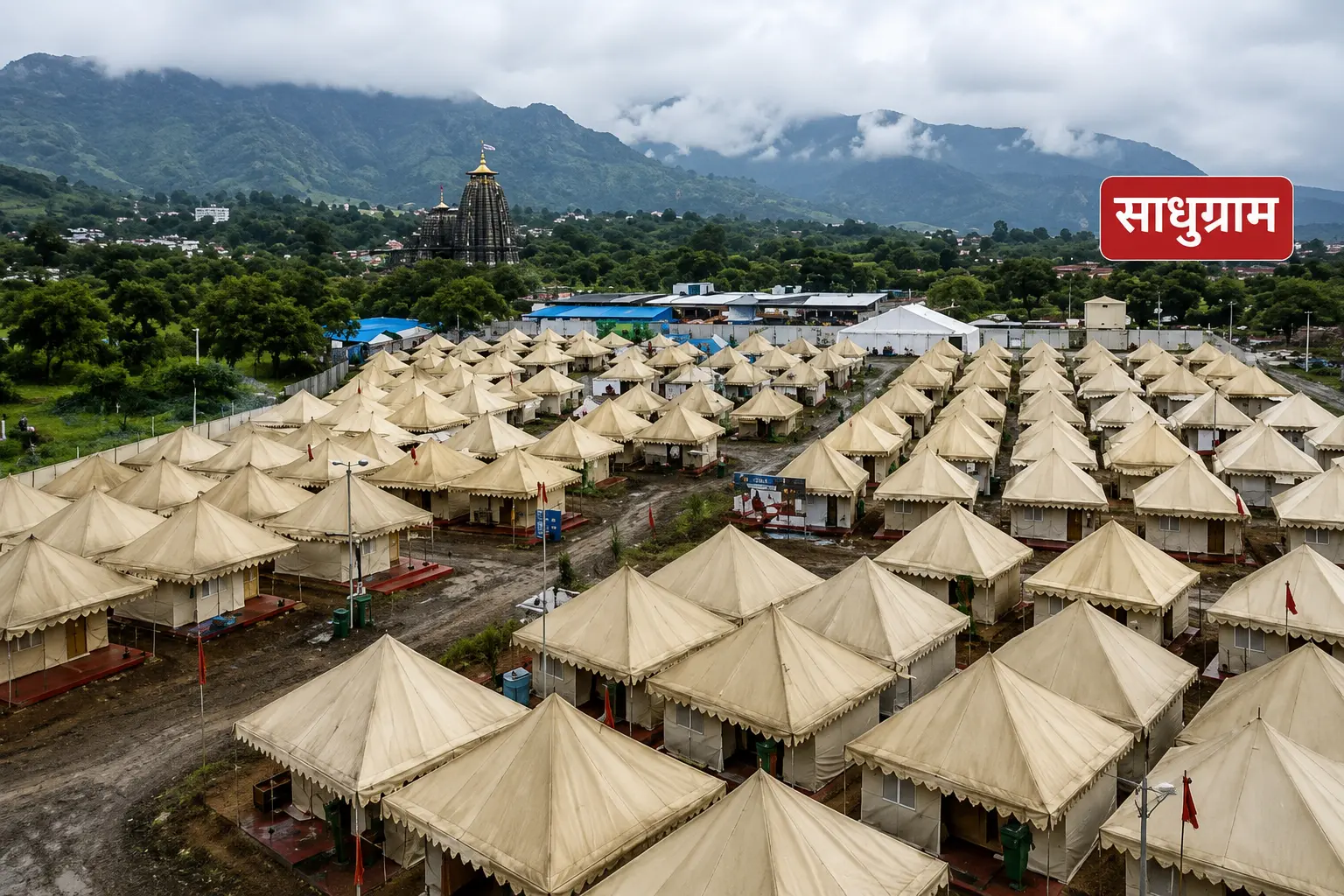
Sadhugram at Nashik Kumbh Mela 2027 Complete Visitor Guide
Millions of people attend Kumbh Mela for the holy bath. But far fewer know about Sadhugram — and those who do often describe it as the most extraordinary part of the entire Kumbh experience. This guide tells you exactly what Sadhugram is, where it is, what you will find inside and how visitors can access it during Nashik Kumbh Mela 2027.
Tourist Sites & Sacred Destinations
The twelve sacred Jyotirlinga shrines dedicated to Lord Shiva, spread across India. These self-manifested lingams are considered the holiest Shiva temples.
Somnath
Somnath Temple, located at Prabhas Patan near Veraval in Gujarat, stands as the venerable first among the twelve sacred Jyotirlingas of Lord Shiva. Situated right on the shores of the Arabian Sea, this magnificent shrine holds an immortal place in Indian history as a symbol of unyielding spiritual resilience. According to Hindu mythology, the temple was originally built by the Moon God (Chandra) in gold after Lord Shiva cured him of a severe curse. It was subsequently rebuilt in silver by Ravana, in wood by Lord Krishna, and in stone by King Bhimdev. Over centuries, Somnath endured seventeen major invasions and destruction by foreign rulers, only to rise again each time like a phoenix from the ashes. The present grand structure was constructed in the Chalukya style of temple architecture under the leadership of Sardar Vallabhbhai Patel and was dedicated to the nation in 1951. The temple complex features the Arrow Pillar (Bana Stambha), which marks a point on earth that leads in a straight line southwards to Antarctica without any landmass in between. The rhythmic sound of crashing ocean waves against the temple's massive stone fortress walls creates an atmosphere of deep spiritual serenity. Daily rituals include grand morning and evening Aartis accompanied by traditional nagadas and resonant conch shells. The captivating evening Light and Sound Show (Sound and Light Spectacle) narrate the heroic history and spiritual legacy of Somnath for visiting pilgrims. Devotees flock here in millions during Mahashivratri and the holy month of Shravan to seek liberation and divine blessings. Nearby pilgrimage spots include Triveni Sangam (the holy confluence of Hiran, Kapila, and Saraswati rivers) and Bhalka Tirth, where Lord Krishna departed from the mortal world. Visiting Somnath offers pilgrims a deep connection to India's timeless spiritual heritage and supreme architectural grandeur. The temple is conveniently accessible via Rajkot and Porbandar airports and has direct rail connectivity through Veraval station. Pilgrims are advised to schedule their visit during the cool winter months from October to March for a comfortable pilgrimage experience.
Mallikarjuna
Situated atop the picturesque Nallamala Hills along the banks of the sacred Krishna River in Andhra Pradesh, Mallikarjuna Temple at Srisailam is an extraordinary pilgrimage destination. It holds the rare distinction of being both one of the twelve Jyotirlingas of Lord Shiva and one of the eighteen Maha Shakti Peethas of Goddess Parvati (Goddess Bhramaramba). According to sacred legends, Lord Shiva and Goddess Parvati assumed the forms of Mallikarjuna and Bhramaramba here to stay close to their son Kartikeya, who had retired to the hills. The temple's ancient architecture showcases magnificent fort-like stone walls carved with intricate sculptures depicting scenes from the Ramayana and Mahabharata. The central sanctum houses the self-manifested Jyotirlinga, where devotees of all castes and creeds are uniquely permitted to perform touch-darshan and pour holy water directly over the deity. The temple complex also houses the revered Bhramaramba Devi shrine, where the Goddess is worshipped in the form of a bee. Surrounded by dense tiger reserves and lush forests, the journey to Srisailam offers breath-taking views of deep river gorges and Sahyadri mountain ranges. Historical inscriptions reveal that royal dynasties including the Satavahanas, Ikshvakus, Chalukyas, Kakatiyas, and Vijayanagara emperors made massive contributions to the shrine. Chhatrapati Shivaji Maharaj himself visited Srisailam in 1677 and constructed a special gopuram (tower) in honor of the temple. The celestial Pathala Ganga, accessible by ropeway or a steep descent of over five hundred stone steps, is where pilgrims take a holy dip before entering the temple. Major festivals like Mahashivratri and Ugadi attract lakhs of devotees from Andhra Pradesh, Telangana, Karnataka, and Maharashtra. The serene atmosphere of Srisailam provides an ideal sanctuary for spiritual meditation and deep internal contemplation. Reaching Srisailam requires a scenic road drive from major hubs like Hyderabad (approx. 215 km) or Kurnool (approx. 180 km). Pre-booking accommodation at the Devasthanam cottages is recommended during peak festival periods.
Mahakaleshwar
Mahakaleshwar Temple, located in the ancient holy city of Ujjain along the banks of the sacred Shipra River in Madhya Pradesh, is a shrine of supreme cosmic power. It holds a unique place among the 12 Jyotirlingas because it is the only 'Dakshinmukhi' (south-facing) Jyotirlinga, a direction associated with death and liberation (Kala). Lord Shiva is worshipped here as Mahakal—the master of time and eternity—who protects his devotees from untimely death and spiritual darkness. The temple is world-famous for its ancient and awe-inspiring 'Bhasma Aarti', performed daily before dawn using sacred ash amidst thunderous chanting of Shiva Stotrams. The five-tiered temple architecture incorporates Chalukya, Maratha, and Rajput styles, with the main sanctum situated underground. Above the Jyotirlinga sanctum sit shrines dedicated to Omkareshwar Shiva, Nagchandreshwar (opened only once a year on Nag Panchami), and Sri Rama. Ujjain is also one of the four sacred sites that hosts the grand Kumbh Mela (Simhastha) every twelve years, drawing tens of millions of sadhus and pilgrims. The temple complex features the sacred Koti Tirth Kund, where holy waters are used for the daily ritual baths of the deity. The newly built 'Mahakal Lok' corridor showcases hundreds of grand statues and murals depicting stories from the Shiva Purana, elevating the pilgrim experience. Historians note that Ujjain was a major astronomical center in ancient India, marking the prime meridian in Hindu astrology. Taking part in the early morning Bhasma Aarti requires prior online registration through the temple trust portal due to immense devotee rush. Visiting nearby holy spots like Kal Bhairav, Harsiddhi Shakti Peeth, and Mangalnath completes the sacred Ujjain pilgrimage circuit. The city is seamlessly connected by direct trains from all major Indian metros and is just 55 km from Indore Airport. Immersing oneself in the intense energy of Mahakal is a transformative experience that instills deep spiritual fearlessness.
Omkareshwar
Omkareshwar, located on the Mandhata Island in the Narmada River in Madhya Pradesh, is an extraordinary Jyotirlinga shrine shaped naturally like the sacred 'Om' symbol. The holy island, carved out by the flowing waters of the Narmada, has been a center of intense spiritual penance since time immemorial. According to legend, King Mandhata performed severe austerities here to please Lord Shiva, who agreed to reside on the island in two forms: Omkareshwar on the island and Mamleshwar on the southern bank. Pilgrims traditionally complete the 7-kilometer 'Omkareshwar Parikrama' (circumambulation path) around the island, visiting ancient shrines, caves, and river ghats along the Sahyadri hill slopes. The main Omkareshwar temple is a multi-storeyed structure supported by intricately carved stone pillars depicting mythological figures. The Jyotirlinga is not a traditional shaped stone but a natural rock formation that is continuously worshipped with Narmada water, milk, and bilva leaves. Taking a holy bath at the confluence of the Narmada and Kaveri rivers (Narmada-Kaveri Sangam) is considered highly meritorious prior to temple darshan. Boating along the tranquil, emerald waters of the Narmada offers breathtaking views of towering cliffs and ancient temple spires line the riverbanks. The daily evening Narmada Aarti turns the ghats into a serene sanctuary of flickering oil lamps and devotional chanting. Great spiritual masters, including Adi Shankaracharya, received their formal monastic initiation under Guru Govinda Bhagavatpada in the ancient caves of Omkareshwar. Special pilgrimage rushes occur during Mahashivratri, Shravan Mondays, and Narmada Jayanti celebrations. Omkareshwar is situated approximately 80 km from Indore and is easily accessible via private cabs, state buses, and broad-gauge train networks. A visit here combines serene riverine beauty with profound Vedic spirituality.
Kedarnath
Nestled at a breathtaking altitude of 3,584 meters above sea level amidst the snow-capped Garhwal Himalayas in Uttarakhand, Kedarnath is the highest and most remote of the 12 Jyotirlingas. Set against the dramatic backdrop of the majestic Kedarnath peak and Kedar Dome, this ancient shrine is also an integral part of the holy Chota Char Dham and Panch Kedar circuits. According to the Mahabharata legend, the Pandavas sought Lord Shiva here to atone for the sins of the Kurukshetra war; Shiva disguised himself as a bull, and when pursued, sank into the earth, leaving his hump at Kedarnath. The sanctum houses a unique conical, triangular rock form that is worshipped as the self-manifested humped form of Shiva. The present stone temple was built over a thousand years ago by Adi Shankaracharya, constructed from massive, precisely interlocking stone slabs that survived the devastating 2013 Himalayan floods. Due to extreme winter weather, the temple remains open for only six months each year (from Akshaya Tritiya in May to Bhai Dooj in November). During the six winter months, the symbolic deity of Kedarnath is shifted down to the Omkareshwar Temple in Ukhimath for daily worship. Reaching Kedarnath requires a challenging 16-kilometer trek from Gaurikund through rugged mountain paths, waterfalls, and alpine meadows. Pilgrims who cannot trek can utilize pony rides, palanquins, or modern helicopter services operating from Phata, Sirsi, and Guptkashi. The morning Abhishek ceremony and evening Aarti amidst icy mountain winds create an unearthly, divine atmosphere that touches every soul. Devotees strictly prepare for the pilgrimage by building physical fitness and acclimatizing to high altitude mountain conditions. The journey tests physical endurance while filling the heart with profound faith and devotion for Lord Shiva. Booking registration through the Uttarakhand Char Dham Yatra portal is mandatory for all visiting pilgrims.
Bhimashankar
Bhimashankar Temple, nestled deep within the lush Sahyadri mountain range near Pune in Maharashtra, is a revered Jyotirlinga surrounded by pristine natural wilderness. Situated at the origin of the sacred Bhima River, this ancient temple is enveloped by the dense forests of the Bhimashankar Wildlife Sanctuary, home to the endangered Malabar Giant Squirrel (Shekru). According to sacred Puranic legends, Lord Shiva manifested here in his 'Bheema' (gigantic) form to slay the fierce demon Tripurasura after an intense celestial battle. The sweat that poured from Lord Shiva's body after the battle is believed to have created the sacred Bhima River. The temple architecture showcases a harmonious blend of ancient Nagara styles and the 18th-century Hemadpanthi architectural style promoted by Nana Phadnavis. The sanctum features a self-manifested Jyotirlinga positioned at a lower level, where water continuously trickles over the sacred stone. A unique feature of the temple complex is a large Roman-style brass bell, gifted by Chimaji Appa after his victory over the Portuguese at Vasai fort in 1739. During the monsoon season, the entire region transforms into a foggy mist-covered paradise with cascading waterfalls and lush green trekking trails. Thousands of 'Kawaritis' and devotees trek up the hills during the holy month of Shravan and on Mahashivratri to offer Gangajal and bilva leaves. The serene natural surroundings make Bhimashankar an ideal destination for spiritual contemplation and nature exploration alike. It is located approximately 110 km from Pune and 210 km from Mumbai, connected by well-paved ghat roads. Direct MSRTC buses and private taxi services operate regularly from Pune, Manchar, and Rajgurunagar. Visitors are advised to carry light rainwear and comfortable walking shoes when visiting during the monsoon months.
Kashi Vishwanath
Kashi Vishwanath Temple, located in the immortal city of Varanasi (Kashi) along the holy banks of the Ganges in Uttar Pradesh, is the spiritual heart of Hinduism. Kashi is believed to be the oldest continuously inhabited city in the world, resting on the trident of Lord Shiva, who is worshipped here as Vishwanath—the Ruler of the Universe. According to ancient scriptures, a person who dies in Kashi achieves instant salvation (Moksha) as Lord Shiva himself whispers the liberating 'Tarak Mantra' into their ears. The Jyotirlinga is enshrined in a silver altar within the sanctum, where devotees perform Sparsh Darshan and pour sacred Ganga water over the deity. The temple has been rebuilt several times through history, with its famous gold-plated spires (Gopurams) donated by Maharaja Ranjit Singh of Punjab in 1835. The newly constructed Kashi Vishwanath Dham Corridor directly connects the temple to the historic Manikarnika and Dashashwamedh Ghats, allowing pilgrims to walk smoothly from the river to the sanctum. Daily rituals include the divine Mangala Aarti at dawn, Bhog Aarti, and the tranquil Shringar Aarti at night. Attending the grand evening Ganga Aarti at Dashashwamedh Ghat nearby is an unmissable spiritual experience that fills the soul with cosmic light and rhythm. Kashi is also home to Annapurna Temple, Vishalakshi Shakti Peeth, and Kaal Bhairav—the administrative guardian deity of the holy city. Navigating the vibrant heritage lanes (Galis) of Kashi gives pilgrims an authentic taste of ancient Indian culture, music, and spiritual devotion. The city is flawlessly connected via Lal Bahadur Shastri International Airport and Varanasi Junction railway station. Prior booking for Mangala Aarti and Sugam Darshan through the official temple portal ensures a smooth and hassle-free spiritual visit.
Trimbakeshwar
Trimbakeshwar Shiva Temple, located 28 km west of Nashik at the foothills of the sacred Brahmagiri Mountain in Maharashtra, is a profoundly unique Jyotirlinga shrine. It is the sacred origin point of the holy Godavari River (Dakshin Ganga), brought down to earth by Sage Gautama through intense penance to cleanse his sins. The most extraordinary feature of the Trimbakeshwar Jyotirlinga is its three-faced lingam housed inside the sanctum, representing the Holy Trinity: Lord Brahma, Lord Vishnu, and Lord Shiva. Over time, due to the continuous application of water, the lingam has formed a small natural hollow that holds the three small thumb-sized emblems. The entire temple structure is built from black basalt stone, demonstrating exquisite Maratha and Hemadpanthi architectural grandeur under the patronage of Peshwa Balaji Baji Rao. The sacred Kushavarta Kund within the temple town is where the Godavari River resurfaces after disappearing into the Brahmagiri hills; taking a dip here is considered extremely purifying. Trimbakeshwar is the world-renowned center for performing specialized Vedic rituals such as Narayan Nagbali, Kaal Sarp Dosh Nivaran, and Tripindi Shradh. During the Simhastha Kumbh Mela held every twelve years in Nashik-Trimbakeshwar, millions of Sadhus belonging to Shaivite Akhadas gather here for the Royal Bath (Shahi Snan). The steep trek up Brahmagiri Hill leads to Gangadwar, where the river trickles out from a cow-shaped rock formation. Pilgrims also visit Neel Parbat nearby, housing temples of Goddess Saptashrungi and Gorakhnath Cave. Trimbakeshwar is seamlessly connected to Nashik CBS via frequent MSRTC buses and private car rentals. Pre-booking authorized Purohits through official Devasthanam portals is recommended for conducting specialized Vedic ceremonies.
Vaidyanath
Vaidyanath Temple, popularly known as Baba Baidyanath Dham, is located in Deoghar in the Santhal Parganas division of Jharkhand. It is worshipped as the divine shrine where Lord Shiva resides as 'Vaidya'—the Supreme Healer who cures physical, mental, and spiritual ailments. According to sacred legends, the demon king Ravana performed intense penance to Lord Shiva, offering his ten heads one by one; pleased by his devotion, Shiva healed Ravana's wounds like a physician. Ravana requested Shiva to accompany him to Lanka in the form of a Jyotirlinga; Shiva agreed on the condition that if the lingam was placed on the ground anywhere en route, it would become permanently fixed there. Lord Varuna and Lord Vishnu created a situation where Ravana had to hand the lingam to a cowherd (Lord Ganesha in disguise), who placed it down at Deoghar, permanently establishing the shrine. The main temple is a 72-foot-tall stone structure flanked by twenty-one other temples dedicated to various deities, interconnected by silver chains. A unique feature of Baidyanath Dham is the 'Chandrakanta Mani' jewel placed atop the temple spire, along with a rare Punchshula (five-pronged trident) instead of a traditional single trident. During the holy month of Shravan, Deoghar hosts the world-famous 'Shravani Mela'—one of the longest religious fairs in Asia. Millions of saffron-clad pilgrims (Kanwarias) carry holy water from the Ganges at Sultanganj on foot over a distance of 105 km to offer it to Baba Baidyanath. The chant of 'Bol Bam' echoes throughout the month as devotees walk barefoot with immense faith and endurance. Deoghar is accessible via its newly constructed airport and Jasidih Junction railway station, located just 7 km from the temple site.
Nageshwar
Nageshwar Jyotirlinga, situated between Dwarka and Bet Dwarka along the coast of Gujarat, is revered as the shrine of the 'Lord of Serpents'. According to the Rudra Samhita in the Shiva Purana, Lord Shiva in this form protects devotees from all poisons, negative energies, and fear of snakes. The legend tells of a pious Shiva devotee named Supriya, who was captured by the demon Daruka and imprisoned in an underwater city ('Darukavana'). Supriya continued his unwavering worship of Lord Shiva, chanting holy mantras and making a clay lingam inside the prison cell. Pleased by Supriya's selfless devotion, Lord Shiva manifested through the earth, destroyed Daruka and his demon army, and established himself as Nageshwar Jyotirlinga. The temple complex is immediately recognizable by a giant, towering 85-foot statue of Lord Shiva seated in a meditative posture, visible from miles away. The sanctum houses a small, subterranean Jyotirlinga made of a special 'Tri-Mukhi' (three-faced) round stone with a small silver serpent coiling around it. Uniquely, the Jyotirlinga faces East while the Nandi statue faces West, contrary to standard temple orientations. Devotees believe that worshipping at Nageshwar frees a person from physical ailments and neutralizes the malefic effects of Rahu and Ketu in astrology. Because of its close proximity to the holy city of Dwarka (approx. 17 km), pilgrims easily combine visits to Nageshwar with Dwarkadhish Temple and Rukmini Devi Shrine. Auto-rickshaws, private taxis, and local tour buses operate continuously along the Dwarka-Nageshwar route. Visiting during early morning hours allows pilgrims to participate in serene Abhishek rituals without heavy crowd rush.
Rameshwaram
Rameshwaram Temple, located on the tranquil Pamban Island in Tamil Nadu, is the southernmost Jyotirlinga and a vital constituent of the sacred Char Dham circuit. It holds profound historical and mythological importance as the place where Lord Rama worshipped Lord Shiva to seek forgiveness for slaying Ravana (a Brahmin) during the epic Lanka war. According to the Ramayana, Hanuman was sent to Mount Kailash to bring a Shiva Lingam, but when he was delayed, Sita built a lingam out of sand (Ramalingam) so Rama could perform the rituals on time. When Hanuman returned with his lingam (Vishwalingam), Rama decreed that the Vishwalingam brought by Hanuman must be worshipped first before the Ramalingam—a tradition strictly followed to this day. The temple is an architectural masterpiece of Dravidian style, boasting the longest temple corridor in the world with over 1,200 massive, intricately carved granite pillars. The complex features twenty-two holy water tanks (Tirthams) inside its premises; pilgrims bathe in water drawn from each Tirtham to cleanse mind and body before entering the main sanctum. The grand sea bath at Agni Tirtham, located right in front of the eastern temple gate, precedes the Tirtham bathing ritual. Rameshwaram is also famous for its close proximity to Dhanushkodi, the starting point of Rama Setu (Adam's Bridge) built across the ocean to Sri Lanka. The island is connected to the mainland by the iconic historic Pamban Rail Bridge across the Palk Strait. The spiritual vibrations, ocean breezes, and exquisite stone carvings make Rameshwaram a deeply humbling pilgrimage destination.
Grishneshwar
Grishneshwar Temple, located at Verul village just 1 km from the world-famous UNESCO World Heritage Ellora Caves in Maharashtra, is the 12th and final Jyotirlinga. Also known as Ghushmeshwar, the temple's history is tied to the legend of a pious woman named Kusuma (or Ghushma), whose devotion to Lord Shiva was so profound that Shiva revived her slain son from a holy pond. Pleased by her devotion, Shiva agreed to manifest permanently in the pond as Grishneshwar ('Lord of Compassion'). The present temple is a stunning example of south-Indian influenced Hemadpanthi stone architecture, rebuilt in the 18th century by the noble queen Ahilyabai Holkar of Indore. Built using red basalt rock, the temple structure features a 5-tier carved Shikhara adorned with sculptures of Hindu deities, court scenes, and intricate floral patterns. The main sanctum houses a small, self-manifested Jyotirlinga positioned below floor level, where male devotees must remove their shirts before entering the inner shrine as per tradition. Because of its compact size, pilgrims enjoy an intimate, up-close darshan experience, being allowed to touch the holy lingam directly. The temple complex also houses a beautiful carved court, a Nandi mandapa, and the sacred Shivalay pond nearby. Located just 30 km from Chhatrapati Sambhajinagar (Aurangabad), Grishneshwar is seamlessly visited alongside the monolithic Kailasa Temple at Ellora Caves. It serves as a major spiritual stop for tourists traveling along the heritage Golden Triangle circuit of Maharashtra. Regular state transport buses, tourist taxis, and auto-rickshaws operate continuously between Aurangabad city, Ellora, and Grishneshwar.
Maharashtra is uniquely blessed with 5 of India's 12 Jyotirlingas, the highest concentration in any state.
Trimbakeshwar
Trimbakeshwar Shiva Temple, located 28 km west of Nashik at the foothills of the sacred Brahmagiri Mountain in Maharashtra, is a profoundly unique Jyotirlinga shrine. It is the sacred origin point of the holy Godavari River (Dakshin Ganga), brought down to earth by Sage Gautama through intense penance to cleanse his sins. The most extraordinary feature of the Trimbakeshwar Jyotirlinga is its three-faced lingam housed inside the sanctum, representing the Holy Trinity: Lord Brahma, Lord Vishnu, and Lord Shiva. Over time, due to the continuous application of water, the lingam has formed a small natural hollow that holds the three small thumb-sized emblems. The entire temple structure is built from black basalt stone, demonstrating exquisite Maratha and Hemadpanthi architectural grandeur under the patronage of Peshwa Balaji Baji Rao. The sacred Kushavarta Kund within the temple town is where the Godavari River resurfaces after disappearing into the Brahmagiri hills; taking a dip here is considered extremely purifying. Trimbakeshwar is the world-renowned center for performing specialized Vedic rituals such as Narayan Nagbali, Kaal Sarp Dosh Nivaran, and Tripindi Shradh. During the Simhastha Kumbh Mela held every twelve years in Nashik-Trimbakeshwar, millions of Sadhus belonging to Shaivite Akhadas gather here for the Royal Bath (Shahi Snan). The steep trek up Brahmagiri Hill leads to Gangadwar, where the river trickles out from a cow-shaped rock formation. Pilgrims also visit Neel Parbat nearby, housing temples of Goddess Saptashrungi and Gorakhnath Cave. Trimbakeshwar is seamlessly connected to Nashik CBS via frequent MSRTC buses and private car rentals. Pre-booking authorized Purohits through official Devasthanam portals is recommended for conducting specialized Vedic ceremonies.
Bhimashankar
Bhimashankar Temple, nestled deep within the lush Sahyadri mountain range near Pune in Maharashtra, is a revered Jyotirlinga surrounded by pristine natural wilderness. Situated at the origin of the sacred Bhima River, this ancient temple is enveloped by the dense forests of the Bhimashankar Wildlife Sanctuary, home to the endangered Malabar Giant Squirrel (Shekru). According to sacred Puranic legends, Lord Shiva manifested here in his 'Bheema' (gigantic) form to slay the fierce demon Tripurasura after an intense celestial battle. The sweat that poured from Lord Shiva's body after the battle is believed to have created the sacred Bhima River. The temple architecture showcases a harmonious blend of ancient Nagara styles and the 18th-century Hemadpanthi architectural style promoted by Nana Phadnavis. The sanctum features a self-manifested Jyotirlinga positioned at a lower level, where water continuously trickles over the sacred stone. A unique feature of the temple complex is a large Roman-style brass bell, gifted by Chimaji Appa after his victory over the Portuguese at Vasai fort in 1739. During the monsoon season, the entire region transforms into a foggy mist-covered paradise with cascading waterfalls and lush green trekking trails. Thousands of 'Kawaritis' and devotees trek up the hills during the holy month of Shravan and on Mahashivratri to offer Gangajal and bilva leaves. The serene natural surroundings make Bhimashankar an ideal destination for spiritual contemplation and nature exploration alike. It is located approximately 110 km from Pune and 210 km from Mumbai, connected by well-paved ghat roads. Direct MSRTC buses and private taxi services operate regularly from Pune, Manchar, and Rajgurunagar. Visitors are advised to carry light rainwear and comfortable walking shoes when visiting during the monsoon months.
Grishneshwar
Grishneshwar Temple, located at Verul village just 1 km from the world-famous UNESCO World Heritage Ellora Caves in Maharashtra, is the 12th and final Jyotirlinga. Also known as Ghushmeshwar, the temple's history is tied to the legend of a pious woman named Kusuma (or Ghushma), whose devotion to Lord Shiva was so profound that Shiva revived her slain son from a holy pond. Pleased by her devotion, Shiva agreed to manifest permanently in the pond as Grishneshwar ('Lord of Compassion'). The present temple is a stunning example of south-Indian influenced Hemadpanthi stone architecture, rebuilt in the 18th century by the noble queen Ahilyabai Holkar of Indore. Built using red basalt rock, the temple structure features a 5-tier carved Shikhara adorned with sculptures of Hindu deities, court scenes, and intricate floral patterns. The main sanctum houses a small, self-manifested Jyotirlinga positioned below floor level, where male devotees must remove their shirts before entering the inner shrine as per tradition. Because of its compact size, pilgrims enjoy an intimate, up-close darshan experience, being allowed to touch the holy lingam directly. The temple complex also houses a beautiful carved court, a Nandi mandapa, and the sacred Shivalay pond nearby. Located just 30 km from Chhatrapati Sambhajinagar (Aurangabad), Grishneshwar is seamlessly visited alongside the monolithic Kailasa Temple at Ellora Caves. It serves as a major spiritual stop for tourists traveling along the heritage Golden Triangle circuit of Maharashtra. Regular state transport buses, tourist taxis, and auto-rickshaws operate continuously between Aurangabad city, Ellora, and Grishneshwar.
Aundha Nagnath
Aundha Nagnath, located in the Hingoli district of Maharashtra, is revered as one of the most ancient Jyotirlinga shrines, believed to be the 'Nagesham' mentioned in scriptures. According to local traditions and Mahabharata folklore, the original temple was constructed by the eldest Pandava prince, Yudhishthira, during their 14-year exile. The present temple is an architectural marvel of the Hemadpanthi style, constructed from dark black stone with intricate carvings covering its outer walls and base. A unique architectural feature of Aundha Nagnath is that the Nandi statue is situated behind the main temple sanctum rather than directly in front of the lingam. Legend states that when Saint Namdev was singing devotional Abhangas at the back of the temple, priests asked him to leave; Namdev went to the back, and the entire temple magically rotated to face him. The main Jyotirlinga is situated in a small underground sanctum (Garbhagriha), accessible by descending a flight of narrow stone steps. Devotees climb down to touch the holy lingam and perform personal Abhishek rituals under the guidance of local priests. The outer temple walls feature detailed relief carvings depicting scenes from Hindu epics, elephants, horses, dancers, and celestial musicians. The temple compound is spacious and calm, offering a deeply contemplative atmosphere away from heavy urban crowds. Major festivals like Mahashivratri and Vijayadashami draw large numbers of devotees from across Maharashtra and neighboring Telangana. Aundha Nagnath is located approximately 60 km from Nanded and 25 km from Parbhani, well-connected by state highways. Combining a visit to Aundha Nagnath with Parli Vaijnath forms a popular two-day Jyotirlinga pilgrimage route in Marathwada.
Parli Vaijnath
Parli Vaijnath, located in the Beed district of Maharashtra, is an ancient Jyotirlinga shrine celebrated for its healing energies and rich mythological legacy. Situated on a small hillock, Lord Shiva is worshipped here as 'Vaijnath' (Vaidyanath)—the Lord of Physicians who grants physical health and spiritual well-being. According to legend, when Ravana was carrying the Shiva Lingam to Sri Lanka, he paused at Parli; the sage Narada tricked him into placing the lingam on the earth, establishing it here permanently. Another legend connects the temple to the churning of the ocean (Samudra Manthan), stating that Amrit (nectar) and Dhanvantari were consecrated at this site. The temple structure stands on an elevated stone platform, constructed from heavy dark stone in the classic Hemadpanthi architectural tradition. Queen Ahilyabai Holkar of Indore played a major role in renovating and restoring this grand temple during the 18th century. Uniquely, devotees are allowed to touch the Jyotirlinga stone directly during rituals and pour holy water and bilva leaves over it. The temple complex features wide courtyards, grand stone gateways, and several subsidiary shrines dedicated to Lord Ganesha, Goddess Parvati, and Saint Markandeya. During the holy month of Shravan, thousands of pilgrims walk barefoot from surrounding regions carrying holy water to offer Abhishek at the shrine. Parli is also a major railway junction, making it extremely easy for pilgrims to reach from Hyderabad, Pune, Mumbai, and Aurangabad. Visiting Parli Vaijnath offers a deeply spiritual experience rooted in ancient Marathwada heritage and medicinal lore.
Explore Maharashtra's world-renowned heritage sites that showcase centuries of art, architecture, and devotion.
Ajanta Caves
The Ajanta Caves, located in a horseshoe-shaped rocky gorge near Chhatrapati Sambhajinagar (Aurangabad) in Maharashtra, are a UNESCO World Heritage monument of international acclaim. Consisting of 30 rock-cut Buddhist cave monuments dating from the 2nd century BCE to the 5th century CE, Ajanta represents the pinnacle of ancient Indian mural painting and sculpture. These secluded caves served as monsoon retreats for Buddhist monks, as well as educational sanctuaries for scholars and artists traveling along ancient trade routes. The interior walls and ceilings feature world-famous fresco-secco paintings depicting the Jataka tales (previous lives of the Buddha), royal court scenes, and exquisite floral motifs. Cave 1 contains the iconic masterpieces of Bodhisattva Padmapani and Vajrapani, renowned worldwide for their graceful expressions, fluid lines, and delicate shading. Cave 26 features a magnificent 29-foot-long reclining statue of the Buddha representing his Mahaparinirvana (final liberation). The caves lay forgotten under dense jungle foliage for centuries until they were rediscovered in 1819 by a British hunting officer named John Smith. Special fiber-optic lighting and strict preservation measures are maintained by the Archaeological Survey of India (ASI) to protect the delicate mineral pigments. A modern visitor amenities center at the base offers shuttle bus transfers, audio guides, and museum exhibits explaining the artistic techniques used by ancient artisans. Visiting Ajanta offers an unparalleled journey into the golden age of Indian art, Buddhist philosophy, and rock-cut architectural genius. The caves are best visited between October and March when the weather is pleasant and monsoon waterfalls surrounding the gorge are active.
Ellora Caves
The Ellora Caves, situated 30 km from Chhatrapati Sambhajinagar (Aurangabad), stand as one of the most magnificent UNESCO World Heritage rock-cut cave complexes on Earth. Spanning a period from the 6th to the 10th century CE, this extraordinary site features 34 major caves excavated out of the vertical basalt cliffs of the Charanandri Hills. Uniquely in world history, Ellora showcases a harmonious side-by-side coexistence of three major Indian religious traditions: Caves 1-12 are Buddhist, Caves 13-29 are Hindu, and Caves 30-34 are Jain. This religious harmony carved in stone reflects the ancient Indian ethos of 'Sarva Dharma Samabhava' and mutual respect under royal patronage from the Rashtrakuta and Yadava dynasties. Buddhist caves feature massive multi-storeyed monasteries (Viharas) and worship halls (Chaityas) with impressive carved statues of the Buddha. Jain caves, particularly Chhota Kailash and Indra Sabha, display exquisite intricate carvings of Tirthankaras, Yakshis, and lotus ceiling motifs. The Hindu caves culminate in Cave 16—the world-renowned Kailasa Temple—a breathtaking monolithic structure carved top-down from a single mountain cliff. Walking along the 2-kilometer stretch of Ellora caves provides visitors a panoramic view of ancient engineering prowess, artistic evolution, and religious devotion. The site is well-equipped with paved walkways, landscaped gardens, wheelchair ramps, and electric cart services for elderly tourists. Ellora is easily accessible via Aurangabad airport (approx. 35 km) and serves as a major hub on Maharashtra's international tourism map.
Kailasa Temple (Ellora)
The Kailasa Temple (Cave 16) at Ellora Caves is undisputed as one of the greatest architectural and engineering marvels in human history. Commissioned by the Rashtrakuta King Krishna I in the 8th century CE, this grand monolithic temple was carved top-down out of a single solid basalt rock mountain cliff. An estimated 200,000 tons of solid rock were manually excavated over a period of several decades using only basic chisels, hammers, and wooden wedges. Designed to represent Mount Kailash—the celestial Himalayan abode of Lord Shiva—the temple complex stands twice the size of the Parthenon in Athens and is higher than the Taj Mahal. The structure includes a grand gateway (Gopuram), a multi-columned Nandi mandapa, a main assembly hall (Sabhagriha), and a towering sanctum topped by a 3-tiered Dravidian spire. The base of the main temple structure is supported by a magnificent frieze of life-sized carved stone elephants that appear to lift the entire celestial monument on their backs. Intricate wall reliefs portray epic scenes from the Ramayana, Mahabharata, and Shiva Purana, including the famous panel showing Ravana attempting to shake Mount Kailash. Traces of original white plaster and colorful oil paintings still remain visible on the upper ceilings, indicating that the entire temple was originally painted to resemble snow-covered Kailash. Standing in the inner courtyard surrounded by 100-foot-high sheer rock walls leaves visitors and structural engineers speechless at the sheer precision of ancient calculations. Visiting Kailasa Temple requires at least two to three hours to fully appreciate its artistic details, architectural geometry, and spiritual grandeur.
Bhadra Maruti Temple
Bhadra Maruti Temple, located in the historic town of Khuldabad near Ellora Caves, is one of India's most extraordinary Hanuman shrines. It holds the rare distinction of being one of only two temples in the entire country where Lord Hanuman is enshrined in a sleeping or reclining posture (Sleshana Avastha), the other being in Prayagraj. According to local legend, King Bhadrasena of Bhadravati was a passionate devotee of Lord Rama who sang devotional bhajans along the banks of Bhadrakund pond. Enchanted by the divine melody of the songs, Lord Hanuman arrived at the spot and leaned back into a relaxed, sleeping posture to listen peacefully to the praises of Rama. When King Bhadrasena realized Hanuman's presence, he requested the Lord to stay at the spot permanently to bless all visiting pilgrims. The main idol is carved from smooth black stone, depicting Hanuman lying on his side in deep spiritual bliss, adorned with orange vermilion (Sindoor) and marigold garlands. It is believed that praying at Bhadra Maruti relieves individuals from severe mental stress, physical exhaustion, and Saturn (Shani) astrological planetary afflictions. On Saturdays and during Hanuman Jayanti, thousands of devotees walk barefoot from Aurangabad city (approx. 30 km) to offer mustard oil, betel leaves (Pan), and coconut at the shrine. The temple complex is spacious, peaceful, and features community dining halls (Annachatras) serving free prasad meals to all visiting pilgrims. Because of its location just 4 km from Ellora Caves and Grishneshwar Jyotirlinga, Bhadra Maruti is an essential spiritual stop on the Khuldabad-Ellora heritage circuit.
Sacred seats of the Divine Feminine, where the Goddess manifests in her powerful forms. Maharashtra is blessed with some of the most important Shakti Peethas.
Mahalakshmi Temple, Kolhapur
The Shri Mahalakshmi (Amba Bai) Temple in Kolhapur is one of the most revered Shakti Peethas in India, celebrated as the abode of the Supreme Goddess of Wealth and Prosperity. In Hindu tradition, Maharashtra houses 'Three and a Half Shakti Peethas' (Sade Teen Shakti Peetha), and Kolhapur represents one of the complete primary Peethas. According to legend, after a divine disagreement, Goddess Mahalakshmi left Vaikuntha and settled in Karvir (modern Kolhapur) to meditate and protect the region. The ancient temple was constructed in the 7th century CE under the Chalukya dynasty, featuring magnificent stone carvings, pillared halls, and intricate rock sculptures. The idol of Goddess Mahalakshmi is made of precious gemstone (precious stone monolith) weighing around 40 kg, holding a citrus fruit, mace, shield, and a bowl. A unique astronomical marvel occurs twice a year during 'Kiranotsav' (Sun Ray Festival) in November and January, when the rays of the setting sun fall directly on the deity's feet, waist, and face. Devotees perform traditional Kumkumarchana and offer rich Paithani sarees and gold ornaments to the Mother Goddess. The temple complex also houses shrines dedicated to Lord Vishnu, Mahakali, Mahasaraswati, and Navagrahas. Kolhapur is world-famous for its rich cultural traditions, Maratha royal history, Kolhapuri chappals, and distinctive spicy cuisine. The city is seamlessly connected by major expressways, a busy railway station, and daily flights from Mumbai and Bengaluru.
Tulja Bhavani, Tuljapur
Tulja Bhavani Temple, located on the Yamunachala hill in Tuljapur in the Dharashiv (Osmanabad) district, is one of the most vibrant Shakti Peethas in Maharashtra. Goddess Tulja Bhavani is revered as the Kuladaivat (family deity) of millions of families across Maharashtra, Gujarat, Karnataka, and Andhra Pradesh. She is historically famous as the patron deity of Chhatrapati Shivaji Maharaj, who worshipped her regularly and received the legendary 'Bhavani Kadhga' (sword) through her divine grace. The idol of the Goddess is 'Swayambhu' (self-manifested) and made of granite rock, depicted with eight arms holding various weapons as she slays the demon Mahishasura. Uniquely, unlike most Hindu idols fixed permanently to the floor, the idol of Tulja Bhavani is 'Cala' (movable); it is taken out of the sanctum thrice a year for ritual processions. The temple features grand stone entrance gateways named after Sardar Nimbalkar, Chhatrapati Shahaji Raje, and Rajmata Jijau. Pilgrims perform the traditional 'Gondhal' folk dance and ritual singing as an offering to thank the Goddess for fulfilled vows. During the Navratri festival, over a million devotees march barefoot to Tuljapur from distant cities, creating an electric atmosphere of devotional chanting ('Gondhal'). The temple management operates smooth queue management complexes, free prasad distribution centers, and lodging facilities for visiting families. Tuljapur is located approximately 45 km from Solapur railway station, connected by frequent state highway bus services and private taxis.
Renuka Devi, Mahurgad
Renuka Devi Temple, situated atop a scenic hill surrounded by dense forests at Mahurgad in the Nanded district, is one of Maharashtra's revered Three and a Half Shakti Peethas. According to Puranic tradition, Mahur is the birthplace of Lord Dattatreya and the sacred site associated with Sage Jamadagni and his pious wife, Goddess Renuka Devi. Legend tells that when Sage Jamadagni was slain, Renuka committed Sati; her head fell at Mahurgad, making it a powerful center of Divine Feminine energy. The temple houses a natural rock carving depicting the head of Goddess Renuka Devi, adorned with large golden eyes, nose rings, and brilliant red vermilion (Sindoor). Pilgrims climb a flight of around 200 well-maintained stone steps through forest-covered slopes to reach the hilltop sanctum. The temple complex also includes the sacred sites of Anusuya Temple (mother of Lord Dattatreya) and Devdeveshwar Temple located on adjacent hilltops. Mahurgad is surrounded by pristine natural beauty, medicinal plant forests, and ancient forts, offering a tranquil retreat for spiritual seekers. On Shardiya Navratri and Kojagiri Purnima, massive fairs (Yatras) are organized, drawing lakhs of devotees from Maharashtra and Telangana. Devotees offer betel leaves (Pan), coconut, and red chunri to the Goddess while seeking her protective blessings for family well-being. Mahur is situated about 130 km from Nanded city and 90 km from Yavatmal, easily accessible via state transport buses and private car rentals.
Sapshrungi Devi, Vani
Saptashrungi Devi Temple, located at Vani near Nashik in Maharashtra, is a dramatic cliff-top Shakti Peeth nestled amidst seven mountain peaks (Sapta-Shringa). It is celebrated as the 'Half' Shakti Peetha among Maharashtra's Sade Teen Shakti Peethas, representing a place of immense cosmic energy. According to mythology, when the severd limbs of Goddess Sati fell across the subcontinent, her right arm fell at Saptashrungi. Another legend states that Goddess Durga assumed an 18-armed form here to slay the fierce demon Mahishasura, who took refuge in the buffalo form within the cliff rocks. The idol of the Goddess is an 8-foot-tall rock-cut relief carved directly into the sheer cliff face, painted with bright orange Sindoor and holding 18 different weapons. Pilgrims can reach the shrine either by climbing 510 stone steps carved into the mountain edge or by utilizing a modern, scenic Funicular Ropeway service. The view from the temple balcony offers breathtaking panoramas of the Sahyadri valleys, surrounding forests, and deep mountain gorges. The shrine is deeply connected to the Nashik pilgrimage circuit and is regularly visited alongside Trimbakeshwar Jyotirlinga and Panchavati. Navratri celebrations at Saptashrungi are spectacular, marked by continuous Pujas, Abhishek ceremonies, and lakhs of foot-pilgrims walking up the ghat roads. Visitors offer sarees, coconuts, and traditional sweet meats to the Mother Goddess while seeking her divine protection. Saptashrungi is located roughly 60 km north of Nashik city, well-serviced by MSRTC buses and private taxi operators.
A sacred circuit of eight ancient Ganesh temples in Maharashtra, each with a unique self-manifested (swayambhu) idol of Lord Ganesha.
Morgaon (Moreshwar)
Mayureshwar (or Moreshwar) Temple at Morgaon, located about 80 km from Pune, is the primary and most important shrine in the holy Ashtavinayak circuit. According to tradition, a pilgrimage to the Ashtavinayak temples must begin and end at Morgaon to be spiritually complete. The temple name derives from the legend that Lord Ganesha rode a peacock (Mayura) here to slay the fierce demon Sindhu. The temple structure resembles a small fort, built from black stone with four tall minaret-like towers at its corners, reflecting Bahamani historical architectural influence. A unique feature in front of the temple entrance is a large carved stone Nandi bull statue facing Ganesha, which is unusual since Nandi normally faces Shiva lingams. The idol of Mayureshwar is 'Swayambhu' (self-manifested), featuring three eyes and its trunk turned to the left, adorned with diamonds in its navel and eyes. The temple complex features four stone gates representing the four Yugas: Dharma, Artha, Kama, and Moksha. Devotees perform circumambulation (Pradakshina) around the fort-like outer walls before entering the quiet inner sanctum. The town of Morgaon is situated along the Karha River, offering a tranquil countryside environment for visiting pilgrims. Special rush is experienced during Ganesh Chaturthi, Bhadrapada, and Maghi Ganesha Jayanti celebrations. Morgaon is easily accessible by road from Pune via Hadapsar and Saswad, serviced by regular MSRTC buses.
Siddhatek (Siddhivinayak)
Siddhivinayak Temple at Siddhatek, located on the banks of the Bhima River in the Ahmednagar district of Maharashtra, is the second temple in the Ashtavinayak pilgrimage. It is the only shrine in the Ashtavinayak circuit where Lord Ganesha's trunk is turned to his right ('Right-Trunked' or Right-Faced Ganesha). In Hindu tradition, a right-trunked Ganesha idol is considered extremely powerful, fiery, and strict in enforcing ritual purity and discipline. According to legend, Lord Vishnu performed intense penance to Ganesha on the Siddhatek hill before acquiring the 'Siddhi' (divine power) to defeat demons Madhu and Kaitabha. The idol is self-manifested and enshrined within a small hill cave; the main temple was built by Ahilyabai Holkar of Indore in the late 18th century. Pilgrims perform a rigorous hill circumambulation (Pradakshina) around the entire Siddhatek hill, covering a distance of about 1.5 km over rough stone paths. It is believed that performing Pradakshina here with true devotion grants quick fulfillment of desires and clears major life obstacles. The quiet location along the flowing Bhima River provides a serene environment for meditation and spiritual chanting. Siddhatek is situated approximately 200 km from Pune and 90 km from Daund, connected via state highways and river bridges. Visiting Siddhatek requires adherence to traditional temple dress codes and quiet reverence within the sanctum.
Pali (Ballaleshwar)
Ballaleshwar Temple at Pali, situated between the historic fort of Sarasgad and the Amba River in Raigad district, is a deeply revered Ashtavinayak shrine. It holds the unique distinction of being the only Ashtavinayak temple named after a devoted human worshipper—a young boy named Ballal—rather than a divine title. According to legend, young Ballal's intense devotion to Ganesha angered his local village elders and father, who beat him and tied him to a rock in the forest. Ballal continued chanting Ganesha's name relentlessly; pleased by his unwavering faith, Lord Ganesha appeared, healed his wounds, and agreed to reside permanently at Pali under Ballal's name. The temple is constructed entirely out of stone, designed in such an architectural manner that during the winter solstice, the early morning sun rays fall directly on the idol. The idol of Ballaleshwar is self-manifested, seated on a stone throne with a trunk turned left and diamonds studded in its eyes and navel. Behind the main sanctum stands another shrine called 'Dhundi Vinayak', housing the original stone idol that boy Ballal worshipped in the forest. A massive Portuguese bell, won by Chimaji Appa at Vasai fort, hangs in the temple wooden courtyard and rings with a deep resonant sound. Pali is also famous for its nearby natural hot water sulphur springs at Unhere, where pilgrims take therapeutic baths. Located about 120 km from Mumbai and 125 km from Pune, Pali is easily reachable via the Mumbai-Goa highway.
Mahad (Varadvinayak)
Varadvinayak Temple at Mahad, located in the scenic Khalapur taluka of Raigad district near Khalapur, is the fourth shrine in the Ashtavinayak circuit. Lord Ganesha is worshipped here as 'Varadvinayak'—the benevolent Granter of Boons and fulfiller of righteous desires. According to legend, the idol was discovered in a natural pond near the temple by a sage named Gritsamada in ancient times. The temple features a quaint, traditional wooden assembly hall and a beautiful tiled courtyard, surrounded by lush green coconut and betel nut groves. Uniquely, an eternal oil lamp ('Nandadeep') has been burning continuously inside the main sanctum since 1892 without interruption. The self-manifested idol faces east, featuring a left-turned trunk and a soft, gentle expression carved out of stone. Uniquely at Mahad, devotees are allowed to enter the sanctum directly and perform personal puja and touch-darshan of the holy idol. Four carved stone elephant statues guard the corners of the temple roof, representing strength and royal guardianship. The temple pond (Pushkarani) located in front of the main entrance adds to the peaceful rural charm of the shrine. Mahad is conveniently located near the Mumbai-Pune Expressway, approximately 80 km from Mumbai and 85 km from Pune. Pilgrims often combine a visit to Mahad with Pali Ballaleshwar due to their close geographical proximity in Raigad district.
Theur (Chintamani)
Chintamani Temple at Theur, located at the confluence of three rivers (Mula, Mutha, and Bhima) about 25 km from Pune city, is the fifth Ashtavinayak shrine. Lord Ganesha is worshipped here as 'Chintamani'—the divine redeemer who drives away all worries, anxieties, and mental troubles ('Chinta'). According to Puranic legend, Sage Kapila possessed the magical 'Chintamani' jewel that fulfilled all wishes; a greedy prince named Gana stole the jewel. Sage Kapila prayed to Lord Ganesha, who defeated prince Gana under a Kadamba tree at Theur and restored the precious jewel to the sage. Sage Kapila then placed the jewel around Ganesha's neck, giving him the title Chintamani Vinayak. The temple architecture was heavily patronized by the Peshwa rulers of Pune; Madhavrao Peshwa was a deeply devoted follower who renovated the shrine and spent his final days at Theur. The idol is self-manifested, seated facing east with a trunk turned left, featuring sparkling jewel-studded eyes. The temple complex includes a grand wooden Sabhamandapa (assembly hall) and serene outer courtyards overlooking the river confluence. Theur's close proximity to Pune makes it one of the most accessible and frequently visited Ashtavinayak temples. It serves as a peaceful retreat for city dwellers seeking spiritual relief from modern lifestyle stresses.
Lenyadri (Girijatmaj)
Girijatmaj Temple at Lenyadri, located near Junnar in the Pune district, is the most unique and adventurous shrine in the Ashtavinayak circuit. It is the only Ashtavinayak temple situated within an ancient complex of rock-cut Buddhist caves (Cave 7 among 30 caves) on a high mountain cliff. The name 'Girijatmaj' translates to 'Born of Girija' (Goddess Parvati), marking the spot where Parvati performed intense penance for twelve years to have Ganesha as her son. To reach the temple sanctum, pilgrims must climb a steep flight of 307 stone steps carved directly into the mountain face. The temple hall is a massive monolithic cave hall carved out of solid rock, completely un-supported by any central stone pillars. The idol of Girijatmaj is carved directly into the rear rock wall of the cave, featuring a gentle, unpolished self-manifested form that faces south. Because the cave is protected as a monument under the Archaeological Survey of India (ASI), no electric lighting or artificial modifications are allowed inside the main cave chamber. The mountain location offers stunning aerial views of the surrounding Kukadi River valley, grape farms, and Shivneri Fort (birthplace of Chhatrapati Shivaji Maharaj). Visiting Lenyadri provides a memorable blend of physical trekking, ancient rock-cut cave archaeology, and deep spiritual devotion. It is located about 95 km from Pune and 15 km from Junnar, well-connected by MSRTC buses and private cars.
Ozar (Vighnahar)
Vighneshwar (or Vighnahar) Temple at Ozar, located on the banks of the Kukadi River near Junnar in Pune district, is the seventh Ashtavinayak shrine. Lord Ganesha is worshipped here as 'Vighnahar'—the supreme Vanquisher of Obstacles and protector of his devotees. According to legend, a demon named Vighnasura created chaos across the world, disturbing religious ceremonies and sage penances. The gods prayed to Lord Ganesha, who defeated Vighnasura; the demon surrendered and begged Ganesha to reside at Ozar using his name as a prefix, promising never to harm devotees where Ganesha is worshipped. The temple is enclosed by massive stone fortification walls and features a grand paved courtyard guarded by two large stone gateways. The temple spire (Shikhara) is golden-plated, shimmering brightly against the blue sky and surrounding river waters. The self-manifested idol faces east, with its trunk turned left, featuring rubies in its eyes and a diamond on its forehead. The inner sanctum is beautifully decorated with silver arches, intricate wood carvings, and glowing oil lamps. The serene location along the Kukadi River dam backwaters offers a calm atmosphere, ideal for family reflection and prayer. Ozar is located approximately 85 km from Pune and just 20 km from Lenyadri, making it easy to visit both shrines on the same day. Regular bus transport and private taxi services connect Ozar seamlessly to Junnar, Narayangaon, and Pune.
Ranjangaon (Mahaganapati)
Mahaganapati Temple at Ranjangaon, located on the Pune-Ahmednagar highway about 50 km from Pune, is the eighth and final shrine in the Ashtavinayak pilgrimage circuit. Lord Ganesha is worshipped here as 'Mahaganapati'—the most powerful, fierce, and regal form of Ganesha possessing ten arms and twelve eyes. According to legend, Lord Shiva worshipped Mahaganapati at this spot to seek his blessings before battling and destroying the demon Tripurasura and his three flying cities. The temple architecture was designed in such a precise way that during the solar equinoxes, the morning sun rays shine directly onto the deity's idol. The temple gateway is grand, flanked by two large carved guardian statues (Jay and Vijay) and constructed in classic Maratha architectural style under the Peshwas. The present visible idol is self-manifested, facing east with a left-turned trunk and a pleasant facial expression. Legend mentions a hidden, ultra-powerful idol with ten trunk arms called 'Mahotkat', buried in a secret basement beneath the main sanctum. Pilgrims completing their Ashtavinayak journey at Ranjangaon offer special Modaks, durva grass, and coconuts in gratitude for safe pilgrimage completion. The temple complex features spacious paved courtyards, modern queue lines, and extensive parking facilities for travelers. Located directly along a major state highway, Ranjangaon is easily reachable by frequent public and private transport from Pune.
Maharashtra's beloved hill retreats offering cool climate, stunning views, and natural beauty - perfect for a refreshing break during your pilgrimage.
Lonavala
Lonavala, nestled at an altitude of 622 meters in the Sahyadri mountain range between Mumbai and Pune, is Maharashtra's most famous and accessible hill station. Renowned worldwide for its lush green valleys, mist-covered mountain peaks, and cascading waterfalls, Lonavala serves as a refreshing natural retreat for pilgrims and tourists alike. During the monsoon season (June to September), the hill station transforms into a tropical paradise with roaring waterfalls like Bhushi Dam and mist swirling across mountain roads. Major scenic viewpoints include Tiger's Leap (Tiger Point), which offers panoramic cliff views of deep gorges, and Lion's Point, famous for spectacular sunset vistas. The historic Karla Caves and Bhaja Caves nearby showcase ancient rock-cut Buddhist architecture dating back to the 2nd century BCE. Lonavala is globally famous for 'Chikki'—a traditional Indian sweet made from jaggery, peanuts, sesame seeds, and crushed nuts, with dozens of heritage sweet shops lining the main market. Lonavala Lake and Pawna Lake nearby offer tranquil lakeside camping, boating, and peaceful evening walks amidst nature. The town provides excellent luxury resorts, heritage hotels, and budget stay options catering to all categories of travelers. Directly connected by the Mumbai-Pune Expressway and major railway lines, Lonavala is located just 80 km from Mumbai and 65 km from Pune. It serves as a perfect relaxing pitstop for travelers touring western Maharashtra's heritage, temple, and fort circuits.
Khandala
Khandala, situated just 3 km from its twin hill station Lonavala, is a picturesque hill retreat perched on the western slopes of the Sahyadri mountain range. Immortalized in Indian popular culture and Bollywood cinema, Khandala is beloved for its dramatic valley landscapes, deep ravines, and refreshing cool climate. The hill station played a historical role as a strategic mountain pass along ancient trade routes connecting the Konkan coast to the Deccan plateau. One of its most famous landmarks is 'Duke's Nose' (locally known as Nagphani), a prominent rocky cliff shape resembling a cobra's hood, popular among rock climbers and trekkers. Kune Falls, a spectacular three-tiered waterfall cascading down from a height of 200 meters, is one of the highest waterfalls in Maharashtra. Amrutanjan Point provides sweeping views of the historic Duke's Nose cliff and the busy Mumbai-Pune Expressway winding through deep mountain tunnels below. The serene Khandala Lake offers quiet walking paths along its wooded shores, ideal for morning walks and peaceful contemplation. Unlike its busier neighbor Lonavala, Khandala retains a quieter, more relaxed green charm with historic colonial bungalows and lush private estates. Visitors enjoy hiking along forest trails, savoring hot local snacks like corn pakodas and chai while enjoying mountain fog. Khandala is effortlessly reached within a 2-hour drive from Mumbai via the Expressway, making it an easy weekend getaway throughout the year.
Mahabaleshwar
Mahabaleshwar, perched at an altitude of 1,353 meters in the Western Ghats of Satara district, is Maharashtra's premier and highest hill station. Once serving as the summer capital of the Bombay Presidency during British colonial rule, it is famous for its cool climate, dense evergreen forests, and breathtaking valley vistas. Mahabaleshwar is globally celebrated as India's 'Strawberry Capital', producing over 85 percent of the country's strawberries across sprawling farm estates. Visitors can tour strawberry farms, pluck fresh berries, and enjoy delicious strawberry creams and jams at famous outlets like Mapro Garden. The hill station features dozens of iconic viewpoints, including Arthur's Seat (Queen of Points), Needle Hole Point (Elephant's Head), Wilson Point (highest sunrise point), and Kate's Point. Venna Lake, a large man-made lake surrounded by tall trees, offers row boating, pedal boating, and horseback riding along its scenic shores. Nearby sits Old Mahabaleshwar, home to the ancient Panchganga Temple—the sacred confluence source of five rivers: Krishna, Venna, Koyna, Savitri, and Gayatri. The historic Pratapgad Fort, built by Chhatrapati Shivaji Maharaj and famous for the battle against Afzal Khan, stands majestically just 20 km away. Mahabaleshwar's dense forests are home to rare flora, fauna, and scenic walking trails lined with majestic silver oak and eucalyptus trees. Located about 120 km from Pune and 260 km from Mumbai, Mahabaleshwar is well-connected by smooth ghat roads and regular state transport buses.
Cultural Showcase
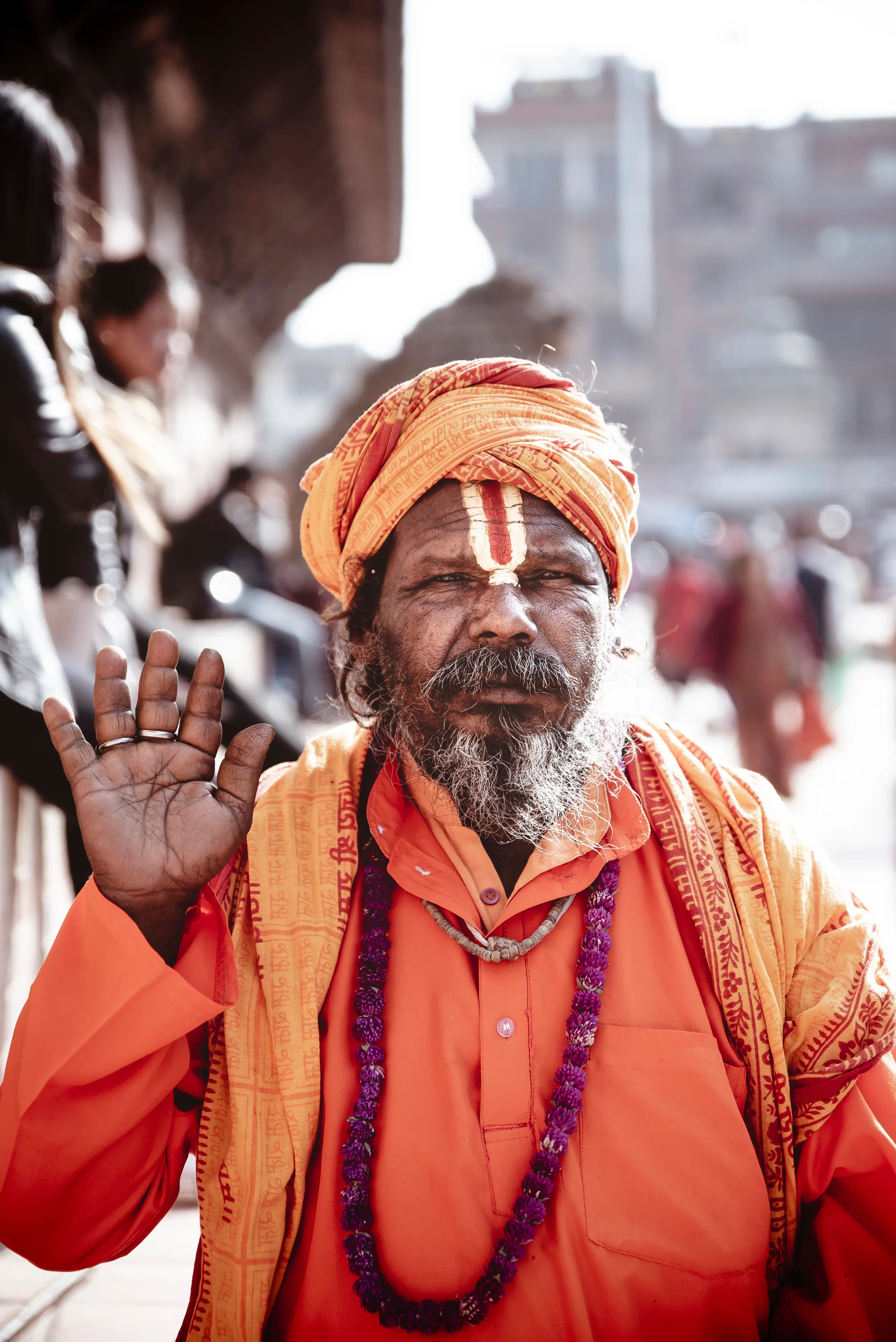
Sadhus & Saints
Holy men and ascetics who have renounced worldly attachment gather from every corner of India, carrying forward sacred traditions passed down through millennia. Representing diverse lineages, philosophy, and rigorous tapas, these venerated sages dedicate their lives to spiritual realization and selfless guidance. During major gatherings, pilgrims from around the world receive their divine blessings, seeking inner transformation and wisdom. Through silent meditation, chanting, and austere practices, these spiritual guardians keep the timeless teachings of ancient India alive, offering seekers a rare glimpse into profound spiritual devotion.

Akharas
Akharas serve as traditional monastic orders and spiritual academies responsible for preserving, defending, and transmitting Hindu philosophical knowledge across generations. Divided into distinct sects representing different spiritual lineages, these sacred centers serve as hubs of intense devotion, scriptural study, and physical discipline. Sadhus residing in these orders adhere to strict vows, training in ancient scriptures as well as traditional martial disciplines. Their grand processions during sacred gatherings remain a central attraction, symbolizing the unity, resilience, and unbroken continuity of India's spiritual heritage.
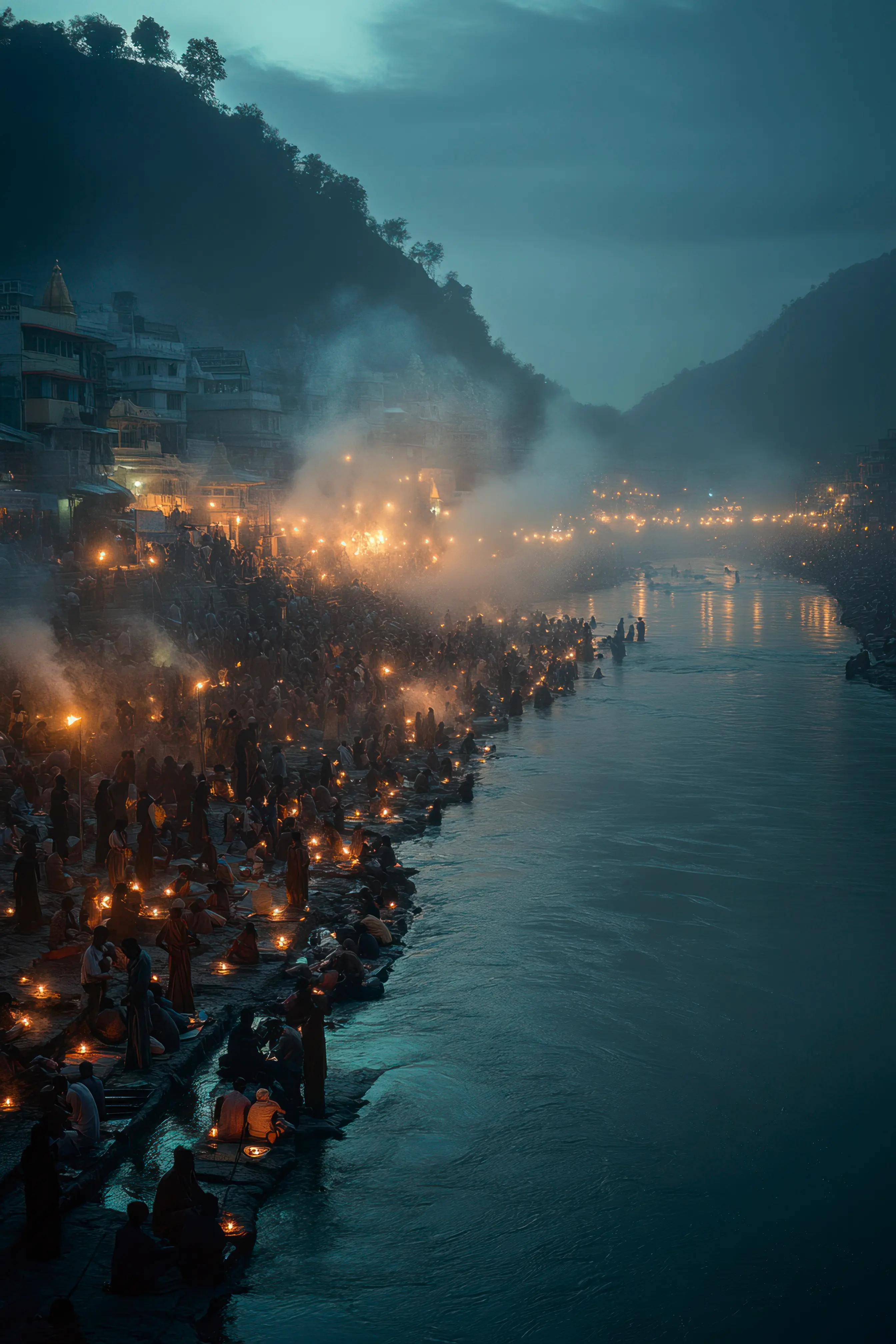
River Rituals
Sacred bathing ceremonies performed during auspicious celestial alignments represent a profound act of spiritual purification. Millions of devotees submerge themselves in the holy waters, believing the sacred dip cleanses accumulated karma, purifies the mind, and guides the soul toward ultimate liberation. Accompanied by traditional Vedic mantras, floral offerings, and incense, these timeless rituals transform riverbanks into vibrant centers of cosmic energy. Beyond personal devotion, these communal gatherings reflect collective faith, shared harmony, and deep reverence for the sacred waters that sustain life.
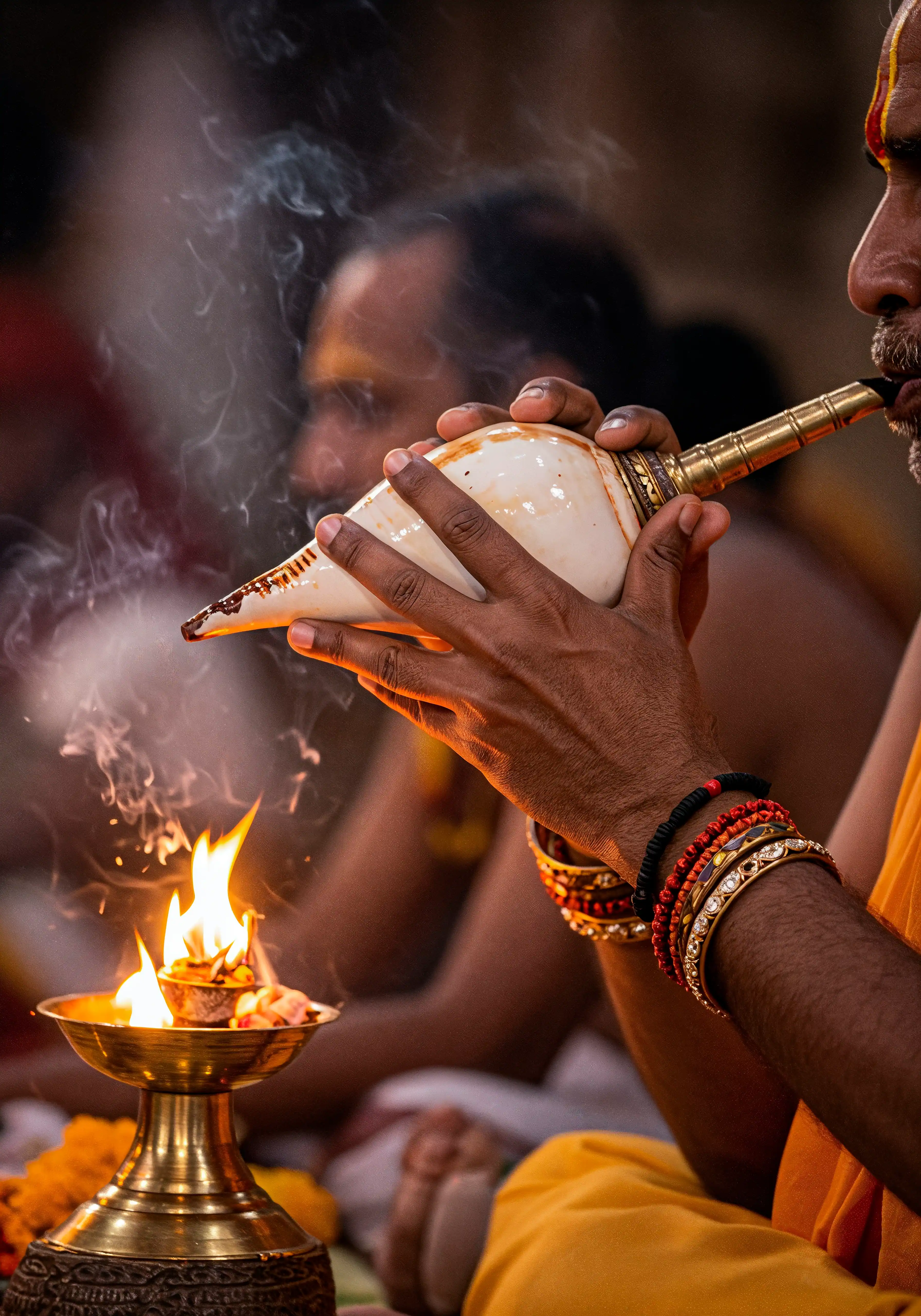
Evening Aarti
As twilight falls, the river ghats come alive with the captivating sight and soothing sounds of the evening Aarti ceremony. Priests clad in traditional attire synchronize multi-tiered brass lamps, offering sacred fire to the holy river amidst the resonant ringing of temple bells and chanting of hymns. Devotees softly float illuminated earthen lamps on the water, creating a breathtaking constellation of glowing lights across the river surface. The harmonious blend of fire, incense, rhythmic chants, and serene waters offers an unforgettable spiritual experience filled with peace, gratitude, and divine connection.